
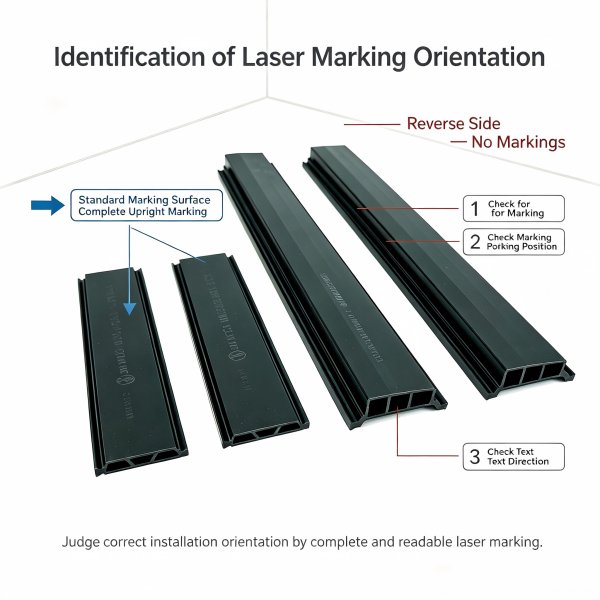
Anti-counterfeiting identification of the spray code on the insulation strip
In response to the current situation in the broken-bridge aluminum insulation strip market, where there is homogeneity, low-price competition, and difficulty in distinguishing the quality, this article points out that compliant laser marking is the only verifiable and difficult-to-copy inherent quality control mark for insulation strips. It can directly identify the authenticity and determine the compliance level of the material. It is a hard evidence for various regular engineering entry inspec
Currently, the market for broken bridge aluminum insulation strips is experiencing severe price competition and internal price wars. The product appearance is highly homogeneous, and it is difficult for ordinary practitioners to distinguish between new materials, recycled materials, and mixed materials based solely on color, cross-section, and texture. This has led to widespread industry such as buying inferior products at high prices and using low-quality materials. The insulation strip inkjet marking, as the only visible, verifiable, and non-copyable explicit identifier, is a core means for uickly identifying the authenticity of the product, determining the material grade, and meeting the engineering acceptance standards. Many high-end projects, real estate decoration projects, and government acceptance projects have already listed "complete inkjet marking, compliant information, and traceability" as mandatory standards for insulation strip entry acceptance. This article deeply analyzes the core role of inkjet marking in anti-counterfeiting identification, quality screening, and project delivery, helping the industry accurately avoid pitfalls and achieve standardized acceptance.
1. Laser marking is the most obvious anti-counterfeiting barrier for insulation strips.
The appearance of the insulation strips can be imitated, the color can be adjusted, the size can be modified, and the hardness can be adjusted. However, the clarity, abrasion resistance, character spacing, and coding rules of the genuine original factory laser marking cannot be replicated by low-end imitations. The new material genuine manufacturers use high-precision synchronous laser marking, with deep, uniform, transparent characters, resistant to abrasion, temperature and weathering, and still clearly visible during later strip insertion extrusion, profile spraying, and high-temperature curing processes.
In contrast, counterfeit and recycled product labels often use cheap ink for printing. The characters are superficial, blurry and faint, with uneven spacing. They will fall off with a slight touch and will completely fade away under high temperatures. A large number of products from small workshops are directly produced without any printing and come out blank. They are sold as brand products by simply pasting stickers, and their anti-counterfeiting capabilities are almost zero. The product quality is completely unguaranteed.
2. The inkjet printing information can directly determine the product compliance level.
The regular insulation strips will clearly indicate the implementation standard, material model, glass fiber content, and product grade. This allows for a direct distinction between national standard qualified products, high precision grade, non-standard materials, and downgraded materials. For example, a compliant PA66GF25 insulation strip will have a clear inkjet printing that indicates the corresponding national standard code and material parameters, indicating that the product formula is compliant, the test has met the standards, and the performance is qualified.
Low-quality blends, PA6 substitutes, and recycled materials often fail to indicate the true standards and material parameters. There are common problems such as missing spray code information, incorrect application of standards, and false specification marking. By comparing the spray code information with the national standard parameters, it is possible to quickly determine whether the product is compliant without the need for complex testing equipment, significantly improving the efficiency of incoming quality inspection.
3. Inkjet marking serves as a mandatory basis for project acceptance and document filing.
In the formal project acceptance systems of high-rise buildings, large public facilities, and high-end residences, the insulation strips, as the core energy-saving components, are required to provide complete product certificates, test reports, and batch traceability materials. The batch information of inkjet marking is the sole physical reference for document filing and on-site verification.
During on-site inspections, the supervisors and the third-party testing institutions will verify the batch number, production date, and applicable standards of the profile surface labels, and compare them one by one with the submitted reports. Products without labels, with inconsistent labels, or whose batch numbers do not match will be directly classified as unqualified. Such products will not be able to pass the energy-saving acceptance and the project completion acceptance. Therefore, standardized label printing is a necessary condition for the smooth delivery of the project and the successful filing of the relevant documents.
4. The Logical Basis of Quality Stability Behind the Inkjet Printing Specifications
The completeness, clarity, and durability of inkjet printing essentially reflect the equipment precision, process level, and quality control system of the manufacturing enterprise. Manufacturers that can achieve continuous laser inkjet printing throughout the process have stable extrusion equipment, a standardized raw material system, and standardized production management. As a result, the core indicators such as product size deviation, density, thermal aging, hardness, and density of the products are more stable.
Production lines that frequently experience nozzle failure, nozzle leakage, unclear spraying, and nozzle detachment often have problems such as outdated equipment, process fluctuations, mixed production, and lack of quality control. The performance of product batches fluctuates greatly, and it is highly likely to encounter quality issues such as cracking, deformation, aging, and sealing failure. Therefore, the nozzle spraying status serves as a simple and accurate indicator for evaluating the production strength of the manufacturer and the stability of the products.
5. The Industry Upgrade Value of Standardizing Labeling Control
Emphasizing the acceptance of label printing for insulation strips can effectively combat the chaos of low-price products from unqualified manufacturers, counterfeit products, recycled material products. This measure can force manufacturing enterprises to standardize their processes, adhere to national standards, and conduct compliant production. For window and door enterprises and engineering parties, using label printing as the basis for acceptance criteria can quickly screen out legitimate supply chains, avoid quality risks, simplify the acceptance process, and increase the success rate of project delivery. It is a cost-effective, efficient, and highly accurate quality control method.
Conclusion
The inkjet marking on the insulation strips is not only a marking tool, but also a comprehensive quality control carrier for product anti-counterfeiting, quality identification, project acceptance, and batch traceability. The clarity, durability, and authenticity of the inkjet marking correspond to the purity of the insulation strip material and the production standardization. Incorporating the compliance of inkjet marking into the regular acceptance standards is an important approach for the window and door industry to avoid inferior quality risks, improve project quality, and achieve standardized high-quality development.
1. Laser marking is the most obvious anti-counterfeiting barrier for insulation strips.
The appearance of the insulation strips can be imitated, the color can be adjusted, the size can be modified, and the hardness can be adjusted. However, the clarity, abrasion resistance, character spacing, and coding rules of the genuine original factory laser marking cannot be replicated by low-end imitations. The new material genuine manufacturers use high-precision synchronous laser marking, with deep, uniform, transparent characters, resistant to abrasion, temperature and weathering, and still clearly visible during later strip insertion extrusion, profile spraying, and high-temperature curing processes.
In contrast, counterfeit and recycled product labels often use cheap ink for printing. The characters are superficial, blurry and faint, with uneven spacing. They will fall off with a slight touch and will completely fade away under high temperatures. A large number of products from small workshops are directly produced without any printing and come out blank. They are sold as brand products by simply pasting stickers, and their anti-counterfeiting capabilities are almost zero. The product quality is completely unguaranteed.
2. The inkjet printing information can directly determine the product compliance level.
The regular insulation strips will clearly indicate the implementation standard, material model, glass fiber content, and product grade. This allows for a direct distinction between national standard qualified products, high precision grade, non-standard materials, and downgraded materials. For example, a compliant PA66GF25 insulation strip will have a clear inkjet printing that indicates the corresponding national standard code and material parameters, indicating that the product formula is compliant, the test has met the standards, and the performance is qualified.
Low-quality blends, PA6 substitutes, and recycled materials often fail to indicate the true standards and material parameters. There are common problems such as missing spray code information, incorrect application of standards, and false specification marking. By comparing the spray code information with the national standard parameters, it is possible to quickly determine whether the product is compliant without the need for complex testing equipment, significantly improving the efficiency of incoming quality inspection.
3. Inkjet marking serves as a mandatory basis for project acceptance and document filing.
In the formal project acceptance systems of high-rise buildings, large public facilities, and high-end residences, the insulation strips, as the core energy-saving components, are required to provide complete product certificates, test reports, and batch traceability materials. The batch information of inkjet marking is the sole physical reference for document filing and on-site verification.
During on-site inspections, the supervisors and the third-party testing institutions will verify the batch number, production date, and applicable standards of the profile surface labels, and compare them one by one with the submitted reports. Products without labels, with inconsistent labels, or whose batch numbers do not match will be directly classified as unqualified. Such products will not be able to pass the energy-saving acceptance and the project completion acceptance. Therefore, standardized label printing is a necessary condition for the smooth delivery of the project and the successful filing of the relevant documents.
4. The Logical Basis of Quality Stability Behind the Inkjet Printing Specifications
The completeness, clarity, and durability of inkjet printing essentially reflect the equipment precision, process level, and quality control system of the manufacturing enterprise. Manufacturers that can achieve continuous laser inkjet printing throughout the process have stable extrusion equipment, a standardized raw material system, and standardized production management. As a result, the core indicators such as product size deviation, density, thermal aging, hardness, and density of the products are more stable.
Production lines that frequently experience nozzle failure, nozzle leakage, unclear spraying, and nozzle detachment often have problems such as outdated equipment, process fluctuations, mixed production, and lack of quality control. The performance of product batches fluctuates greatly, and it is highly likely to encounter quality issues such as cracking, deformation, aging, and sealing failure. Therefore, the nozzle spraying status serves as a simple and accurate indicator for evaluating the production strength of the manufacturer and the stability of the products.
5. The Industry Upgrade Value of Standardizing Labeling Control
Emphasizing the acceptance of label printing for insulation strips can effectively combat the chaos of low-price products from unqualified manufacturers, counterfeit products, recycled material products. This measure can force manufacturing enterprises to standardize their processes, adhere to national standards, and conduct compliant production. For window and door enterprises and engineering parties, using label printing as the basis for acceptance criteria can quickly screen out legitimate supply chains, avoid quality risks, simplify the acceptance process, and increase the success rate of project delivery. It is a cost-effective, efficient, and highly accurate quality control method.
Conclusion
The inkjet marking on the insulation strips is not only a marking tool, but also a comprehensive quality control carrier for product anti-counterfeiting, quality identification, project acceptance, and batch traceability. The clarity, durability, and authenticity of the inkjet marking correspond to the purity of the insulation strip material and the production standardization. Incorporating the compliance of inkjet marking into the regular acceptance standards is an important approach for the window and door industry to avoid inferior quality risks, improve project quality, and achieve standardized high-quality development.