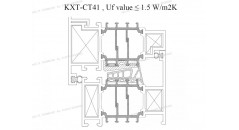
» Uf 1.5 K/m2K CT 41 mm thermal breaks | Solutions for aluminium window frame 2016-03-22 16:15:47
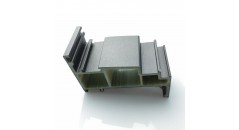
KXT-CT41 , 41 mm width, Uf value ≤ 1.5 W/m2K. With adjustable legs, suitable for aluminium profile with different dimensions. ...[ View More ]

KXT-CT41 , 41 mm width, Uf value ≤ 1.5 W/m2K. With adjustable legs, suitable for aluminium profile with different dimensions. ...[ View More ]
Energy-Saving Material–New Inspiration Glass Fiber Profile...[ View More ]
In response to the current situation in the broken-bridge aluminum insulation strip market, where there is homogeneity, low-price competition, and difficulty in distinguishing the quality, this article points out that compliant laser marking is the only verifiable and difficult-to-copy inherent qual...[ View More ]
Root‑cause analysis proves over 80% of PA66 thermal‑break‑strip defects arise from inadequate drying. Improper drying triggers bubbles, fiber delamination, dimensional deviation and aging, bringing safety and energy‑saving risks to doors and windows. This article analyzes wrong drying practi...[ View More ]
Ignoring the storage and transportation of the insulation strips may lead to quality risks! This article elaborates on the standardized regulations for the transportation and storage of PA66GF25 insulation strips, avoiding deformation, moisture absorption, and performance degradation issues, and str...[ View More ]
This article focuses on the quality defect of the PA66GF25 heat insulation strip at the end, analyzing the forming mechanism and typical fault types of the deformation caused by the mold accuracy defect, elaborating on its harm to the assembly accuracy of doors and windows, energy-saving sealing and...[ View More ]
Temperature cycling is the main cause of fatigue failure and service life decline of PA66 thermal break strips, rather than constant temperature conditions. The mismatched thermal expansion coefficients of PA66, glass fiber and aluminum profiles produce alternating stress under repeated cold and hot...[ View More ]
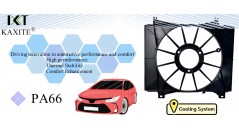
Heat insulation parts in cars, installed in various areas like doors and hoods, significantly enhance interior comfort by reducing heat and noise conduction, thereby improving driving experience and mitigating engine heat impact....[ View More ]
This paper investigates the performance failures of PA66 thermal insulation strips caused by impure raw materials commonly used in the industry. Compared with pure virgin PA66 featuring stable structure and over 20-year service life, strips blended with recycled materials and inferior fillers suffer...[ View More ]
With the upgrading of high-end and minimalist broken-bridge aluminum doors and windows, custom-colored thermal insulation strips have become key aesthetic and differentiated accessories, while widespread market irregularities have caused various performance defects. This paper summarizes the applica...[ View More ]
This article analyzes shrinkage of PA66GF25 glass-fiber-reinforced polyamide thermal barrier strips. These semi-crystalline extruded profiles experience thermal and crystallization shrinkage complying with GB/T 23615.1-2017. Shrinkage stability depends on raw material formulation. 25% glass fiber su...[ View More ]
Completing the processing of custom thermal barrier strip extrusion dies does not finalize product development. New dies must undergo strict trials, sample inspection, profile fitting verification and parameter optimization before formal mass production. Common defects including dimensional deviatio...[ View More ]
This article analyzes the four main causes of surface blemishes in the extrusion production of ‘PA66 fiber insulation strips’: unstable raw material composition, insufficient drying, imbalance in the extrusion plasticization process, and abnormality in the mold and cooling and shaping system. It...[ View More ]
Non-standard insulation strips have poor quality, lack standardization and performance, and do not comply with regulations. National standard insulation strips have pure materials and meet the parameters, which are suitable for domestic conventional projects. European standard base materials a...[ View More ]
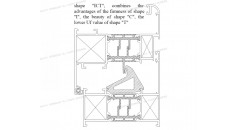
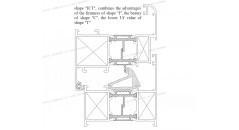
KXT-ICT30 (width 30mm), Uf 2.0 K/m2K. Shape "ICT", combines the advantages of the firmness of shape "I", the beauty of shape "C", the lower Uf value of shape "T". ...[ View More ]
shape "ICT", combines the advantages of the firmness of shape "I", the beauty of shape "C", the lower Uf value of shape "T"....[ View More ]